
Director Avelina Prat embraces solidarity in this tale of a Spanish professor’s escape as he seeks to rediscover himself in Portugal.
By Jorge Alonso Curiel
HoyLunes – With less than three months left in 2025, and while waiting for the releases that will hit theaters until the end of December, it can already be said that this has been a strong year for Spanish cinema.
A variety of themes, perspectives, and styles have emerged over these months, confirming the great moment and richness of our cinema, which shines thanks to the talent and passion of filmmakers, screenwriters, actors, and technicians.
This is evident in films such as “La Buena Suerte” by Gracia Querejeta, “Romería” by Carla Simón, “Mi amiga Eva” by Cesc Gay, “Tardes de Soledad” by Albert Serra, “Sirat” by Oliver Laxe (Spain’s official Oscar submission), “Las Delicias de Jardín” by Fernando Colomo, “La Furia” by Gemma Blasco, “Madrid, Ext”., the documentary by Juan Cavestany, “El Cielo de los animales” by Santi Amodeo, as well as the debut features “Sorda” by Eva Libertad and “Muy Lejos” by Gerard Oms. In the coming weeks, these will be joined by the latest works of Juanma Bajo Ulloa, Alberto Rodríguez, Rodrigo Sorogoyen, David Trueba, and Alauda Ruiz de Azúa, whose third feature film, “Los Domingos”, won the Golden Shell for Best Film at the 73rd San Sebastián Festival and has positioned itself strongly for awards season.

A Portuguese Quinta: A Box Office Success
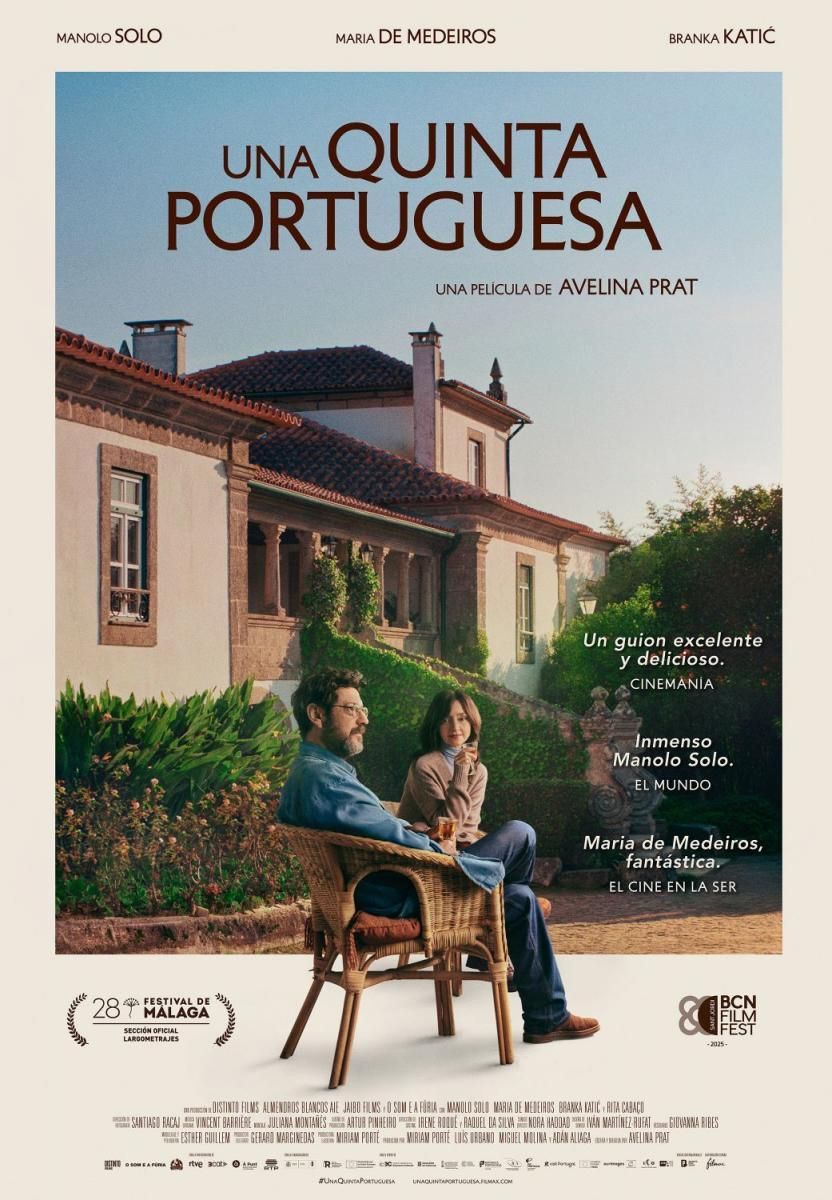
Today, however, I want to highlight one of this year’s releases, a delightful film that has not received the media attention of other productions and may not reach nominations in the major categories of the big awards. Yet audiences have not overlooked it: more than 117.000 viewers have already gone to theaters to enjoy this story about the search for our place in the world. I am referring to “A Portuguese Quinta”, the second film directed by Valencia-born Avelina Prat (1972).

The Journey as a Search for Happiness
A Spanish-Portuguese co-production, it premiered worldwide in March at the Málaga Festival and opened in theaters across much of the country on Friday, May 9.
With a brilliant original script written by the director herself, the film is a remarkable exercise in elegance and subtlety, in which Prat once again reflects on one of the themes that interests and concerns her most: immigration, the inner and outer journey in search of our place in the world.
Audiences already discovered this in her debut feature “Vasil”, released three years ago, after 30 years working as a script supervisor and making several short films. It told the story of a Bulgarian immigrant (Ivan Barnev), a polite and skilled chess player living on the streets of Valencia with no resources, who meets a gruff retired architect, played by Karra Elejalde. The two develop a controversial yet endearing relationship that enriches them both. The two actors shared the Best Actor award at Seminci (the Valladolid International Film Festival).
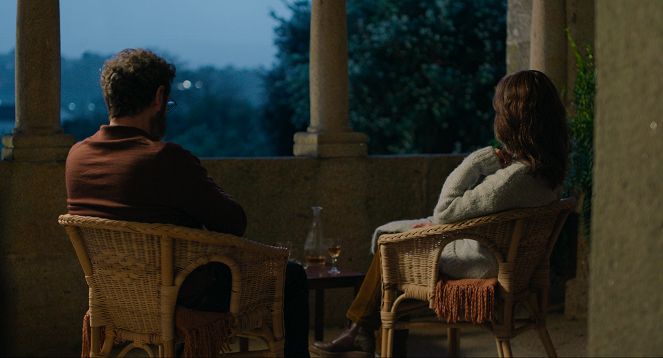
This time, in “A Portuguese Quinta”, the protagonist Fernando—a kind and noble geography professor at the University of Barcelona, convincingly portrayed by Manolo Solo—flees desolately to Portugal after the mysterious disappearance of his Serbian wife (Branka Katic). There, he finds work as a gardener at a quinta (a large country house), assuming the identity of a man he encountered during his escape, and begins a tender and respectful relationship with the owner, played by María de Medeiros.
A Commitment to Solidarity and Understanding
Filmed in three weeks during February and March in northern Portugal at the Quinta de Aldeia, the director crafts a painful yet beautiful and refined drama, full of subtlety and restraint, where silence becomes one of the protagonists—a silence that resonates deeply without falling into tragedy. And, as in her debut “Vasil”, Prat once again weaves a tapestry where kindness and solidarity also play central roles in this film about identity, assumed identity, immigration, loneliness, heartbreak, vulnerability, and the journey in search of refuge and of a home in the world.
This bewildered professor, overwhelmed by circumstances, undertakes both an inner and an outer journey, like a contemporary Ulysses, in pursuit of his reinvention as a person, on a path to find serenity. In this respect, he recalls the character from “Muy Lejos”, another of this year’s films, played by Mario Casas, portraying a young Spanish immigrant in the Netherlands.
With her second feature, Prat takes a firm step toward maturity in her career, delivering a restrained, unsettling yet gentle narrative that underscores the need for understanding and empathy among human beings. A film full of humanity that moves with the sobriety of its poetry and provokes reflection on our condition and our future. A remarkable work that lingers in the memory.
#hoylunes, #jorge_alonso_curiel, #avelina_prat,